
Belmont Resident Lookup Coverage
Belmont is an incorporated city, but a person search crosses city, county, court, and state systems. A parcel or APN can anchor an address. A recorded document shows a party or title event. A court register shows a case role and disposition. Voter, vital, license, business, permit, and unclaimed-property records answer narrower questions. None is a complete resident roster, so compare dates, roles, and directness before treating a hit as evidence.
| Record | What It Confirms | Where to Search | Access |
|---|---|---|---|
| Assessor and map | Parcel, APN, tax destination | ACRE tax tools and GIS | Address/APN; no verified owner-name browse |
| Recorded documents | Indexed party and title activity | RecorderWorks | Free metadata; images by counter or order |
| Voter record | Own status, address, party, participation | My Voter Status | Self-lookup or qualified file |
| Court record | Party role, events, disposition | Odyssey / MIDX | Nonconfidential, nonsealed access |
| Vital record | Birth, death, marriage, divorce event | County custodian or CDPH | Copy classes and limits apply |
| Business or license | Affiliation, agent, credential status | bizfile or DCA | Not proof of residence |
| Permit or probate | Dated project link, decedent or heir | Belmont files or Odyssey | Privacy and document limits |
| Unclaimed property | Possible state-held asset | Controller search | Claim evidence required |
Start with the strongest fact already in hand. Use address and APN tools for a place clue, Odyssey for a case clue, My Voter Status for your own registration, and vital custodians for an event. A business or license result is affiliation evidence. The Belmont street directory angle belongs after a name is anchored to a place, while older household work belongs in the Belmont city directory collections.
A name-only match can also surface an old state-held asset. The California Controller unclaimed-property search uses name and location clues, but a result may be old and requires claim evidence.
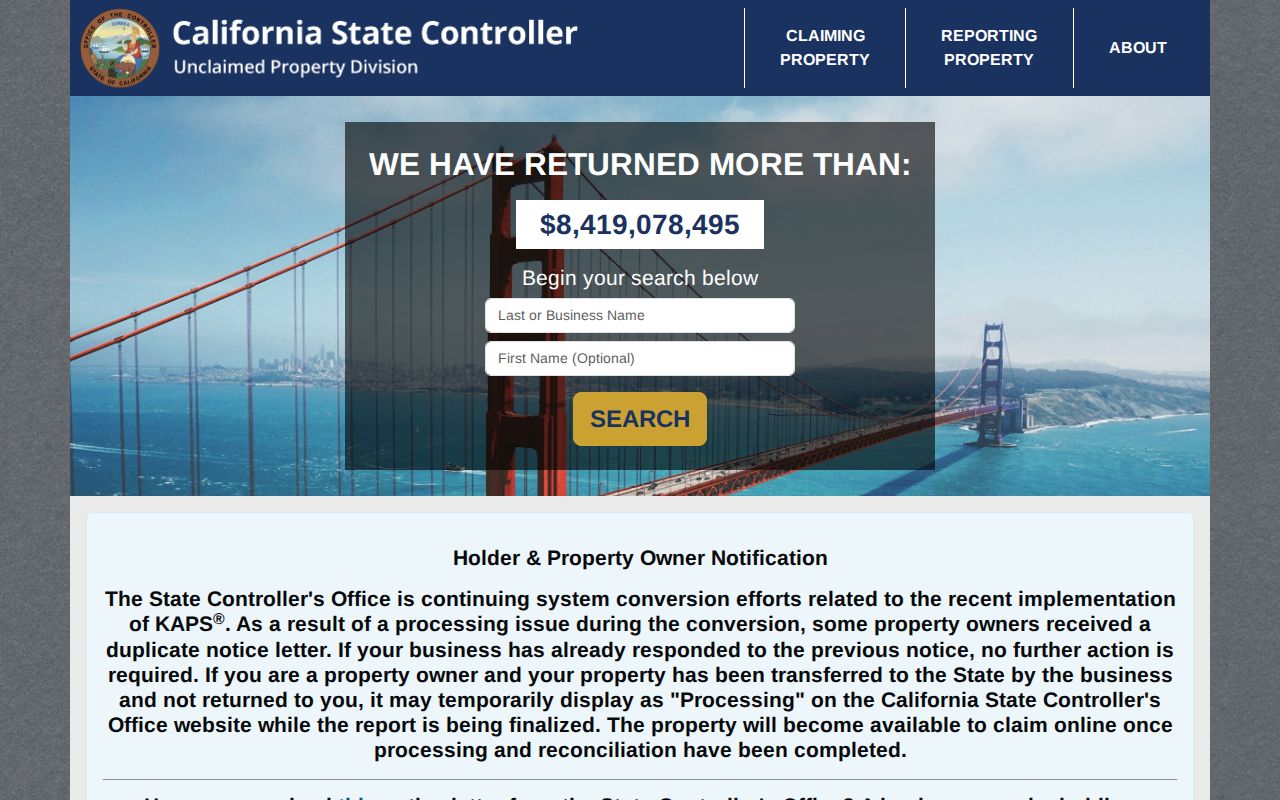
A match can help reconnect a person with an asset, yet it does not prove residence or identity by itself.
Belmont Resident Lookup in Odyssey
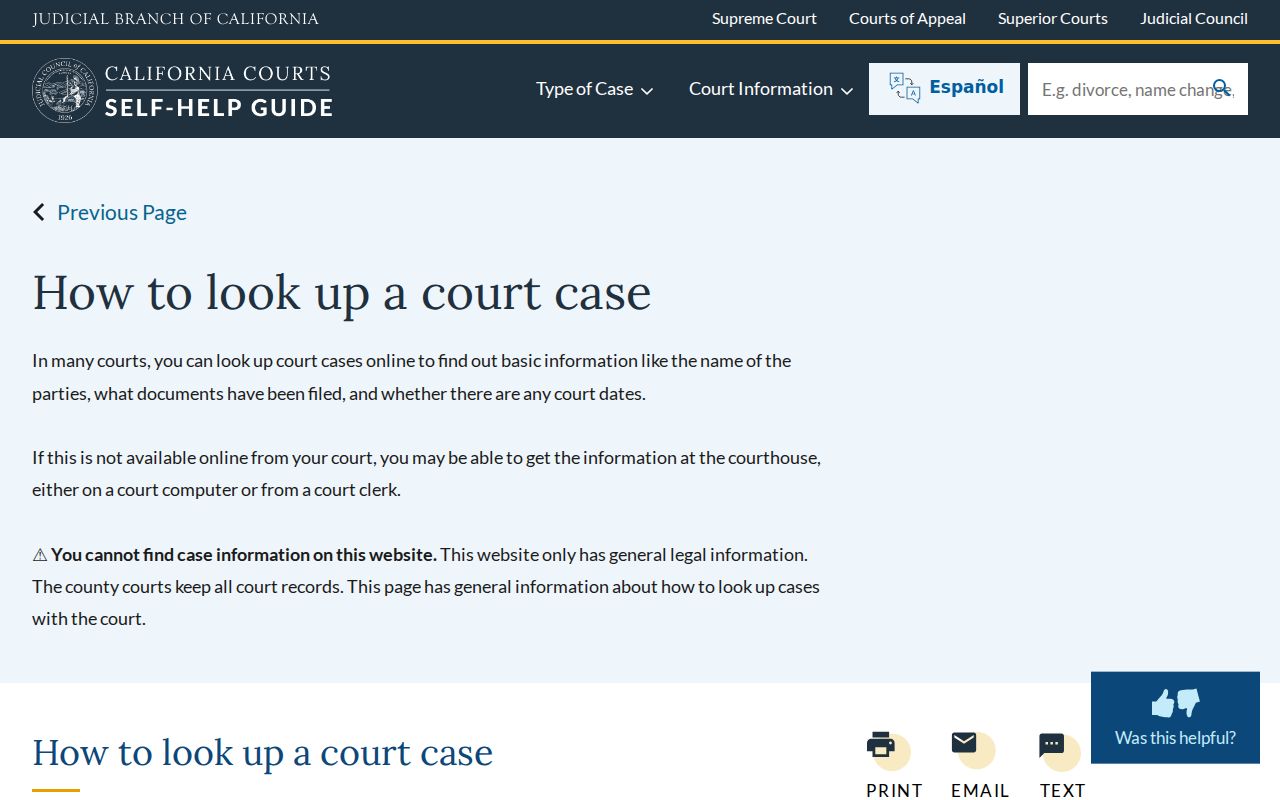
California has no single statewide trial-court party index. The California Courts case lookup guidance sends a Belmont resident lookup to the county court. San Mateo Superior Court's Odyssey Public Portal needs no registration and shows registers for nonconfidential, nonsealed civil, criminal, family-law, probate, small-claims, and traffic cases.
The California Courts guidance points a name search to the custodian rather than implying a statewide result set.
Smart Search accepts a case number or party name, and * broadens a partial name. Advanced filters narrow a broad hit. MIDX separately accepts case number, party name, or filing date.
| Search control | Type | Required | Use |
|---|---|---|---|
| Smart Search | Text | Yes | Case number or party name; * wildcard |
| Advanced Filtering | Filters | No | Narrows a broad Smart Search |
| MIDX case number | Text | Alternative | Nonconfidential index route |
| MIDX party name | Text | Alternative | Name search |
| MIDX filing date | Date | Alternative | Date-based search |
Converted cases filed January 1, 2000 through June 15, 2016 use FAM, CLJ/CIV, PRO, SCS/SCC/SCN, or NM/NF/SC/SF/SM prefixes. Native cases after that date generally use a two-digit year, three-character type, and number, such as 16CIV00123 or 16PRO00123.
A court result can show caption, party roles, public attorneys, dates, case type and status, officer, events, filings, dispositions, orders, and permitted images.
Family documents are presently precluded online. Adoption, juvenile, paternity, mental-health, sealed, and confidential matters are excluded or hidden. Court clerks and courthouse terminals remain fallback channels for public material and certified copies. Ask with the case number, document title, and filing date.
A federal clue belongs in PACER, which covers Northern District of California cases, uses the current federal fee schedule, and routes certified or archived copies through the federal clerk.
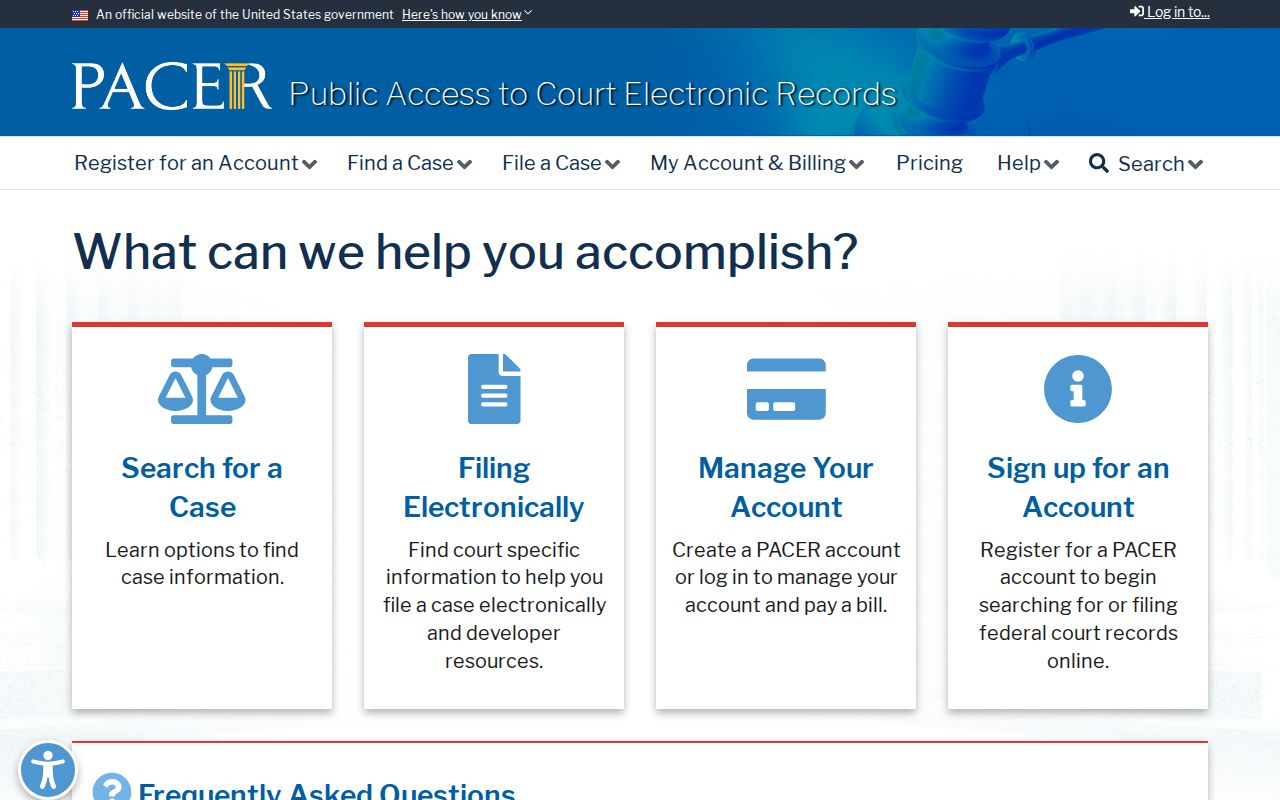
A PACER result is a federal case trail, not a San Mateo Superior Court result. Bankruptcy is a separate federal case system within PACER.
Same-Name Checks in RecorderWorks
RecorderWorks answers a title or recorded-party question, not the broader question of who lives at an address. ACRE property-tax tools accept address or APN, while county GIS exposes APN and situs-address components. An official public owner-name browse was not located. RecorderWorks states online property-document coverage from 1985 to the present, with images excluded online.
Search a name as LAST FIRST, use partial matching, and narrow by party role, date, document type, APN, or book and page. Compare the legal description, spouse or entity variants, dates, and instrument type. A party-name pivot can merge unrelated people, and a deed documents an interest transfer, not a forwarding address.
Check each same-name hit against:
- APN, situs, and legal description.
- Recording date and document type.
- Grantor or grantee role.
- Spouse, trust, or business context.
Public viewing is free at the Recorder counter. Regular copies are $5 for the first page plus $1 for each additional page; certification adds $5 and conformed copies are $10. The office is at 555 County Center, Monday through Friday, 8 a.m. to 5 p.m., 650-363-4500.
Verify a Belmont Resident Across Records
One verification task is to anchor a name, test the legal record, and then seek an event or affiliation that fits. Rank evidence by date and directness. Do not let a tax mailing address, entity agent, or court party role silently become a residence claim.
- Anchor the name to a known address or APN with ACRE tools.
- Test RecorderWorks with spelling and party-role variants.
- Run Odyssey or MIDX and record the case number, role, and disposition.
- Match dates against a vital event or official affiliation.
- Request a certified copy from the correct custodian when proof is needed.
If matches disagree, pause at the source boundary. Probate may identify a public decedent, petitioner, or heir. A permit links a date to an applicant, owner, or contractor. A birth-parent search uses California adoption records and confidential official channels, not an open birth index.
- Docket
- A court's running case record of events, filings, and dispositions.
- Index versus image
- Index data names and dates a record; an image is the underlying document. RecorderWorks omits images online.
- Certified copy
- A custodian-attested copy used when an official copy, rather than a search lead, is required.
Belmont Vital Records and Copy Classes
Vital records prove an event, not a full current profile. The San Mateo County Recorder supplies births and deaths for all county years and public-marriage copies. The local registrar handles the current year and prior year. The County Clerk handles confidential marriages. A divorce decree comes from San Mateo Superior Court. CDPH maintains statewide records and supplies a certificate of record, not the decree, for the periods it holds.
California uses authorized and informational certified-copy classes under Health and Safety Code §§103525-103526. Authorized copies require a listed relationship or function and a sworn statement. Other applicants may receive informational copies for nonconfidential birth, death, and public-marriage records. They are marked and cannot establish identity. Confidential marriage remains restricted under Family Code §509.
CDPH fees effective January 1, 2026 are $31 birth, $26 death, $19 marriage, and $18 dissolution certificate. Use VS 111, VS 112, VS 113A, or VS 113B as applicable. Forms ask for event and applicant details, copy class, relationship or purpose, contact data, signature, and date. A mailed authorized request normally needs notarization. CDPH accepts U.S.-bank check or money order, not cash; county counter and online-vendor channels are separate.
The CDPH county custodian guide distinguishes the local registrar, Recorder, County Clerk, Superior Court, and state divisions before a copy request is mailed.
Six Fields in a Belmont Voter Certificate
California My Voter Status is a self-lookup, not a public people directory. The voter enters first name, last name, full date of birth, and either a California DL or ID number or the last four SSN digits. Results can include status and address, party and language preference, vote-by-mail or provisional status, polling information, county contact, and voter-guide delivery preference.
The San Mateo County elections information and California voter-registration privacy guidance are the source-linked starting points for election access and protected fields.
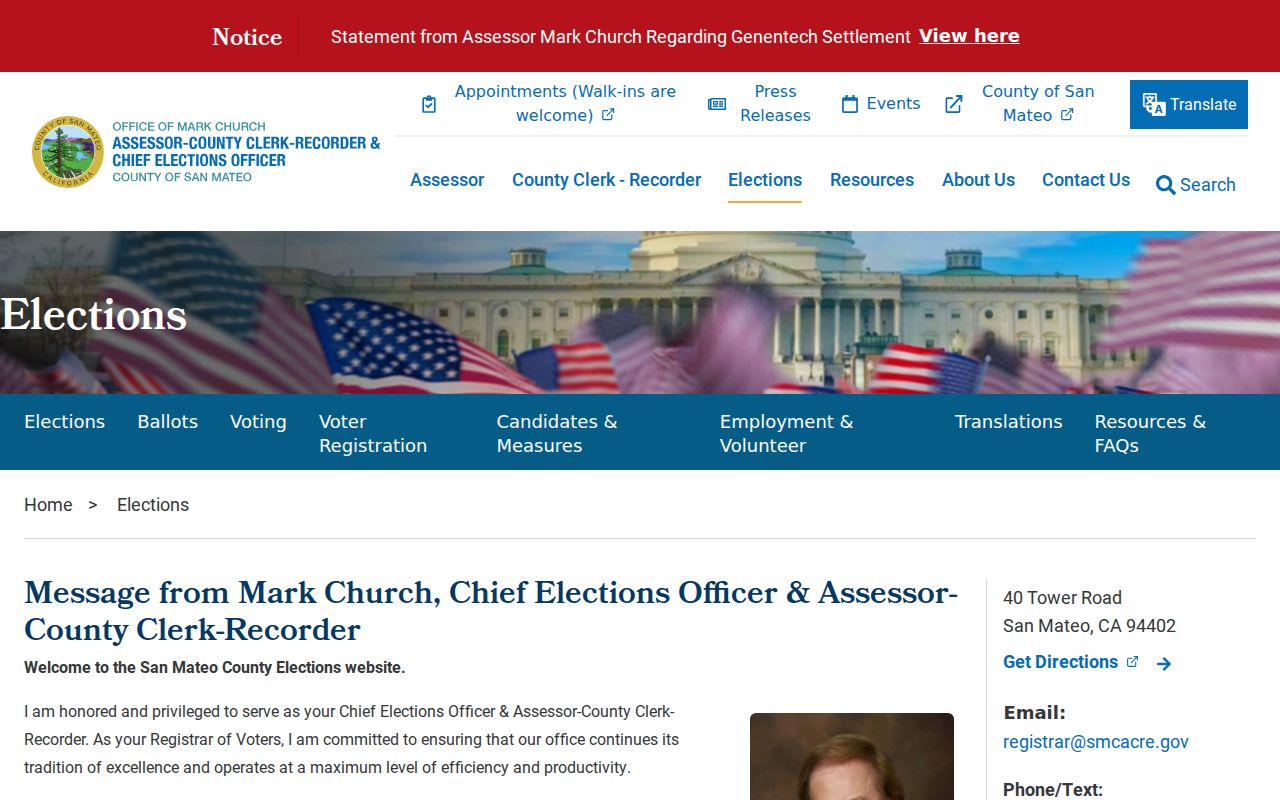
My Voter Status authenticates against a limited extract, and a recent online registration may need 24 hours before lookup. A qualified full voter file is different. Elections Code §2194 limits it to approved election, political, scholarly, journalistic, or governmental purposes. DL or ID numbers, SSN data, unique identifiers, signatures, and protected addresses are withheld.
A qualified file request uses a written application, payment, and ID, in person or by mail to Registration & Elections, 40 Tower Road, San Mateo. The Voter Information file is $125; a printed list is $0.50 per 1,000 names.
A voter's own Certificate of Registration costs $1.50 and can show six fields: full name, registered address, date of birth, party, original registration date, and most recent elections participated. Obtain it in person with photo ID or by mail with ID and payment through Registration & Elections at 40 Tower Road, San Mateo.
Belmont Affiliation and Records Requests
For a business-owner question, bizfile Online searches an entity name or file number, with advanced filters for entity type, status, filing date, and public-traded disclosure. Results can show formation, standing, jurisdiction, street or mailing address, agent, due date, and filed PDFs. The DCA search uses board, license type or number, business name, first and last name, and registry number. Neither proves private residence.
Belmont business licenses have been administered through HdL since 2016 at 650-453-0400 and belmont@hdlgov.com, Monday through Friday, 8 to 5. No public name register was verified. For a known municipal record missing from the city portal, use Belmont's GovQA records channel under the California Public Records Act, Government Code §§7920.000-7931.000.
Agencies generally make an initial determination within ten days. Unusual circumstances can add fourteen days with written reasons, but that is not a production deadline. Request an existing, identifiable record, not a new resident list. Inspection is ordinarily free; copying or data-production costs may apply. Correct a wrong official record with its custodian, not with a downstream copy. A separate California CDCR incarcerated person locator can answer a state-custody question by name or CDCR number, but it is not a Belmont household source.
Privacy Boundaries for a Belmont Resident Lookup
California privacy rules change what a resident lookup can reveal. CCPA deletion or correction rights do not erase a government deed, court file, or assessment record at the source. Safe at Home supplies a substitute address and confidential mail forwarding for qualifying participants, who may also register to vote confidentially. A suppressed address is a protection, not a gap to defeat.
California's DROP portal opened January 1, 2026 for one request covering registered data brokers. Brokers begin processing August 1, and a status can take 90 days. Use the official DROP process for broker records, but do not expect it to remove deeds, court files, or assessment data held by the government.
Lawful use. A Belmont resident lookup is for lawful personal research, family history, reconnecting, and safety awareness. Do not use a name, address clue, voter record, or court result to stalk, harass, intimidate, or harm anyone. California law provides criminal and civil remedies for stalking and harassment.
When a result is wrong, narrow the dispute to the office that created it. When a result is absent, respect the record's access rule rather than trying to infer a protected person's location.