
Belmont Neighbors: Block Sources
A block lookup works best as a set of narrow records, each answering a different question. Belmont and San Mateo County maps establish parcel shape, APN, and situs address. The tax search adds assessment detail by address or APN. RecorderWorks connects a person or entity to recorded instruments, while voter access is limited to the voter or an approved requester. A city inventory names community groups, but it does not publish their members.
| Source | What It Shows About a Block | Access |
|---|---|---|
| Belmont and county GIS | Parcel polygons, adjoining geometry, APN, situs parts, zoning and land-use context | Free map browse; informational |
| ACRE maps and tax search | Address or APN map links and tax-account or assessment detail | Free query and map downloads |
| RecorderWorks and Recorder counter | Grantor, grantee, document type, date, number and later title clues | 1985-present index online; counter view or copy order |
| California voter routes | A voter’s own status and address, or approved file data under statute | Self-lookup or approved purpose |
| Belmont community inventory | Names of neighborhood associations and a few public contact paths | City list; group contact or request |
Ownership is not the same as occupancy. A tax mailing address may differ from the physical situs, and a parcel record usually leaves out renters, children, and other household members. Belmont’s 54.8% owner-occupancy rate for 2020-24 is city context only. It cannot identify the people in any one home. Treat each adjacent parcel as a lead that needs its own source check.
Mapping Belmont Neighbors Outward
The Belmont GIS method is visual and parcel by parcel. Open the Belmont Maps and Data hub, use its local parcel and zoning viewer or the linked San Mateo County Property Information Portal, and begin with one exact address. The map lets a researcher zoom, pan, and click adjacent parcel polygons. It does not turn the whole block into one occupant export.
- Enter the street address and center the map on the subject parcel. Record the APN and situs components shown by the map.
- Click each adjoining polygon in turn. Note the neighboring APN, parcel-map reference, and any city or unincorporated jurisdiction detail.
- Open the available map or tax record for each APN. Keep one note per parcel instead of blending nearby results.
- Use the recorded-document or counter route to test ownership clues. For a full named-street chain, move to the Belmont street directory.
No stable official manual supports a buffer, radius, measure, or all-popup-field promise. Those controls should not be assumed. The map is strong for geometry and the APN join key; title and occupancy questions need separate evidence. A dated permit or project file in Belmont eTRAKiT can add owner, applicant, or contractor context, but registration is required and it does not prove occupancy.
Belmont Parcel Records, One by One
The ACRE Property Maps service gives several ways to stabilize an address before a neighbor comparison. Address mode accepts a street address. APN mode takes a nine-digit number without dashes. Assessor book and page, or a parcel and subdivision map volume and page, can help when an old description does not match a modern street label.
| Map Search Mode | Input | Format or Result |
|---|---|---|
| Find parcels by ADDRESS | Street address | Enter address, then search |
| Find parcels by APN | APN | 9 digits, no dashes |
| Assessor Maps | Book and page | Search the assessor map mode |
| Parcel or Subdivision Maps | PM or RSM, volume and page | Choose the map type, then use Next |
The separate secured tax search also accepts an address or APN. Published GIS material exposes parcel and situs fields, not a verified public owner-name browse. A tax mailing destination still does not prove occupancy. The APN links maps, tax work, many permits, and later deed research. The RecorderWorks index covers 1985-present and omits images. Public documents can be viewed free at 555 County Center or ordered from ACRE using document identifiers; regular copies start at $5 for the first page plus $1 each additional page.
Belmont Voter Files at Block Level
California My Voter Status is a self-lookup, not a way to browse Belmont neighbors. The state voter tool asks for first name, last name, full date of birth, and either a California driver license or ID number, the last four digits of a Social Security number, or the no-identifier path. It can return registration status and address, party preference, language preference, vote-by-mail or provisional status, polling information, and election guidance to the matched voter.
A county file is separate. A full voter file may be sorted or analyzed by street only for an approved requester and an approved election, scholarly, journalistic, political, or governmental purpose. Approved applicants may apply in person with a driver license or mail a signed application, payment, and photo-ID copy. Requests go to Registration and Elections at 40 Tower Road, San Mateo, with the $125 voter-information-file fee, $0.50 per 1,000 names for a printed list, data@smcacre.gov, and 650-312-5222.
The San Mateo election security explanation shows why access is narrow. Elections Code §2194 and Government Code §7924.000 restrict disclosure and use. Participation history means elections voted, never ballot choices. Driver-license, Social Security, unique-ID, and signature fields stay confidential. Safe at Home participants may register as confidential voters.
The county voter-file explanation sets that boundary.
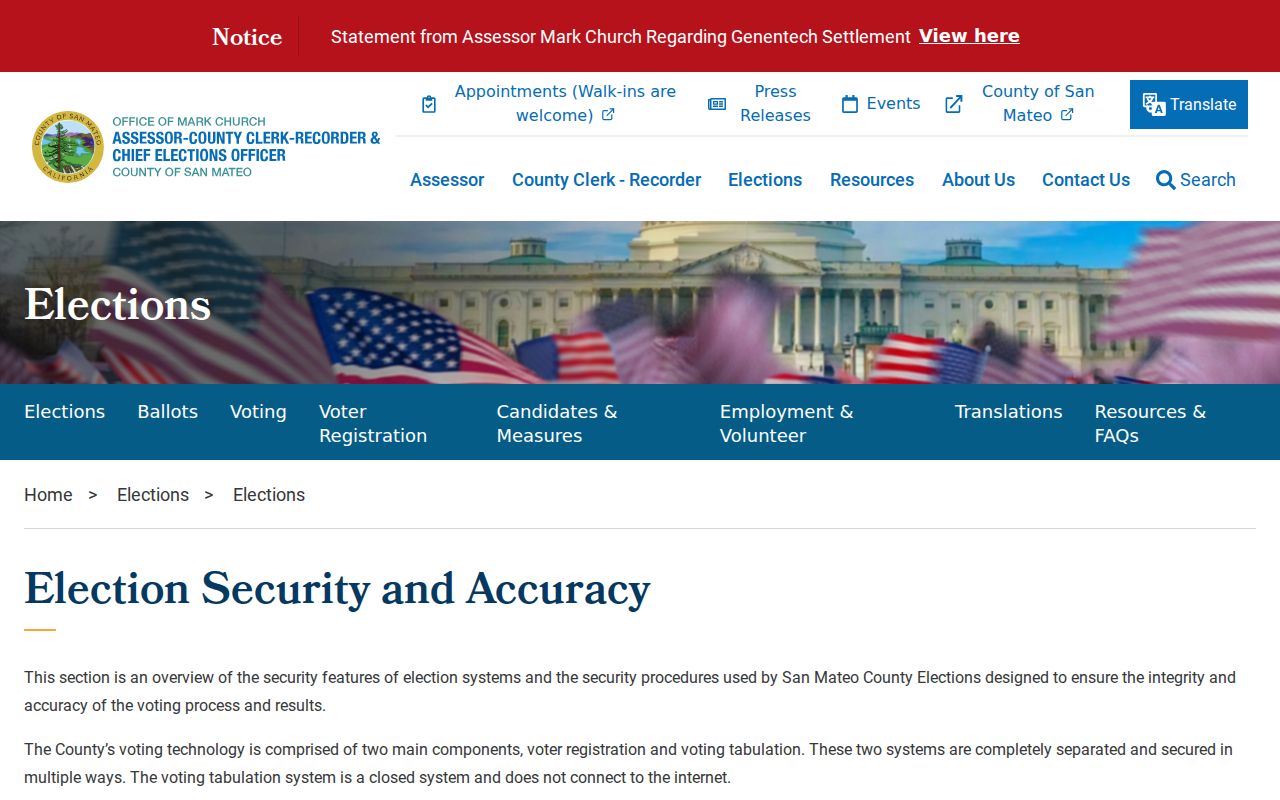
For a person checking their own record, the authenticated tool is the right route. For block analysis, an approved application is required, and the result still cannot be treated as a complete household roster.
Belmont Neighborhood Groups and Contacts
The city’s neighborhood document, updated in March 2023, invites groups to submit a form. It is a contact inventory, not a membership roll. The sixteen names below can point a resident toward a civic contact, newsletter, or association page, but a group name alone does not show who lives on a particular block.
HOA contacts
Antique Forest HOA; Belmont Woods HOA; Farallon HOA; Montcarle HOA.
Central Belmont groups
Belmont Heights Civic Improvement Association (Hallmark), Central Neighborhood, Cipriani Neighborhood, and Downtown Neighborhood Association of Belmont. The city links the civic association to bhcia.org.
Neighborhood associations
Homeview Neighborhood Association; McDougal Neighborhood Association; Plateau-Skymont Neighborhood Association; Sterling Downs Neighborhood Association, which has a documented annual newsletter.
More listed groups
Sterling Point HOA; The Knolls of Belmont; Tudor Village HOA; Western Hills Neighborhood.
Use a public group contact for a welcome, event, or block question. Do not infer a private roster from the city list. Congregation, watch, and club membership is voluntary and private unless the group chooses to publish it.
Belmont Community Memory Beyond Rolls
The Belmont History Room at 10 Twin Pines Lane, behind the Manor Building, holds documents, maps, photographs, and an audio or photo tour that can connect a named family or address to an event. Ask by family, street, subdivision, or landmark. The San Mateo County Historical Association Research Library adds photographs, maps, manuscripts, newspapers, and selected local-government records. The Northwest Information Center at Sonoma State can hold historical or architectural project material, so a house-history question may need all three repositories.
Sterling Downs’ hand-delivered annual newsletter is a useful community-memory source. It may preserve civic participants or neighborhood events missing from parcel and title records, but it is selective and voluntary. A photograph, audio clip, or newsletter mention can suggest where to search next. It is not proof of a current resident list.
Belmont Records or Commercial Tools?
Commercial neighbor-lookup tools can be a quick lead, but their compiled profiles have no single local custodian. Official records take more steps because each one has a defined purpose, field set, and access rule. The difference matters when a block question involves an APN, a recorded owner, a voter record, or a group contact.
| Question | Official Belmont or county source | Commercial category |
|---|---|---|
| Can it identify a parcel? | GIS and ACRE maps show geometry, APN, and situs details. | May combine address data without showing the controlling map source. |
| Can it prove ownership? | Tax and recorded-document channels supply traceable evidence, subject to their limits. | May repeat stale or mismatched data; verify at the custodian. |
| Can it show every neighbor? | No. Voter access is restricted, and parcel records omit many household members. | No. Profiles are compiled, incomplete, and often require payment. |
For a scam check or family-history lead, compare a commercial result only as an unverified clue. Return to the parcel, tax, deed, voter, or community source before acting. The official route is slower, yet it makes the gap between an owner, an occupant, and a possible neighbor visible.
Belmont DROP Privacy Portal
California’s CCPA rights include access, deletion, correction, an opt-out of sale or sharing, limits on sensitive-information use, and nondiscrimination. The Delete Act’s DROP system opened January 1, 2026. Its implementing regulations were adopted September 26, 2025 and took effect January 1. Registered brokers begin processing requests August 1, 2026, must check at least every 45 days, and may take up to 90 days to show a status.
The California DROP portal is the official place to start a single request across registered data brokers. Identifiers are protected or hashed, while optional identifiers can improve matching. A person can request deletion and do-not-sell or do-not-share treatment, provide only matching data, complete verification, save confirmation, and check again when the processing window passes.
The current portal gives Belmont neighbors a timely privacy path that is separate from county parcel access.
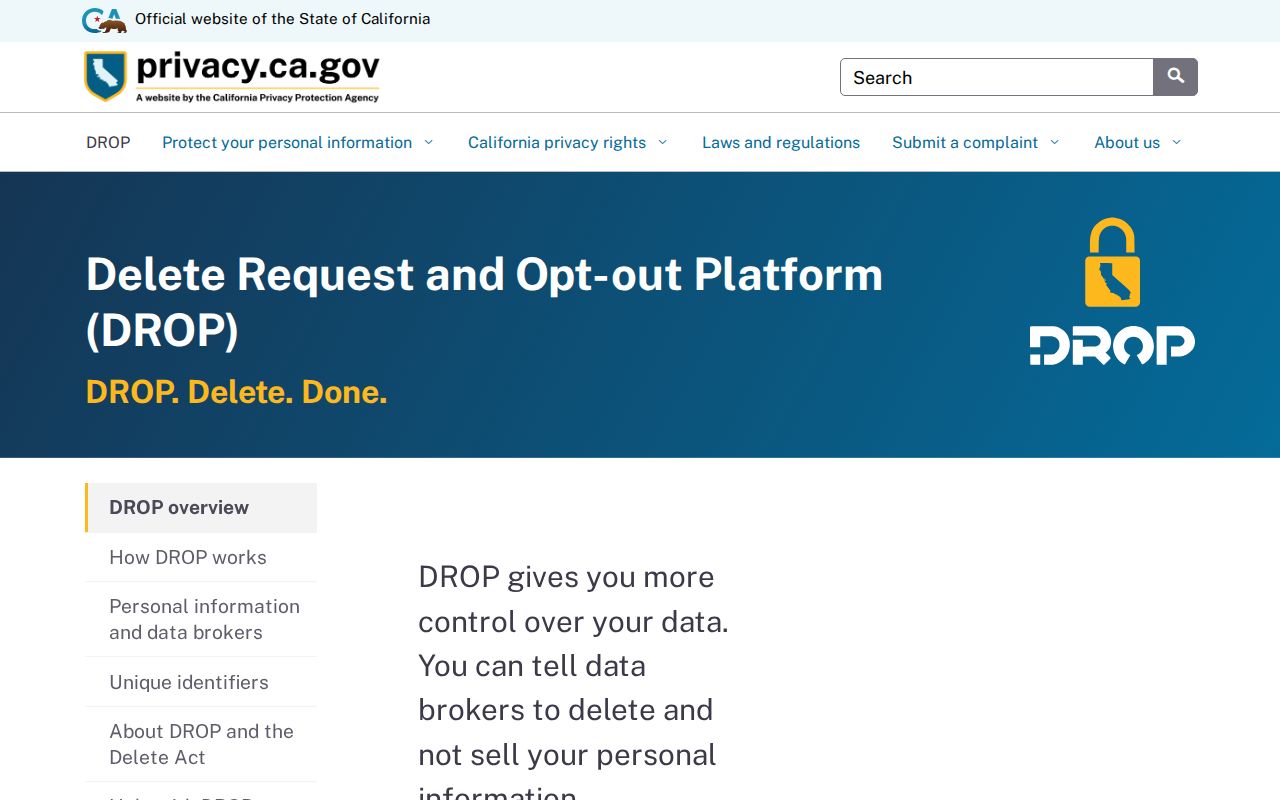
DROP is aimed at registered brokers. It does not change the rules for a public map, a county tax account, or a lawful request held by a government custodian.
The DROP deletion status explanation shows why confirmation and a later recheck matter when a request is still being processed.
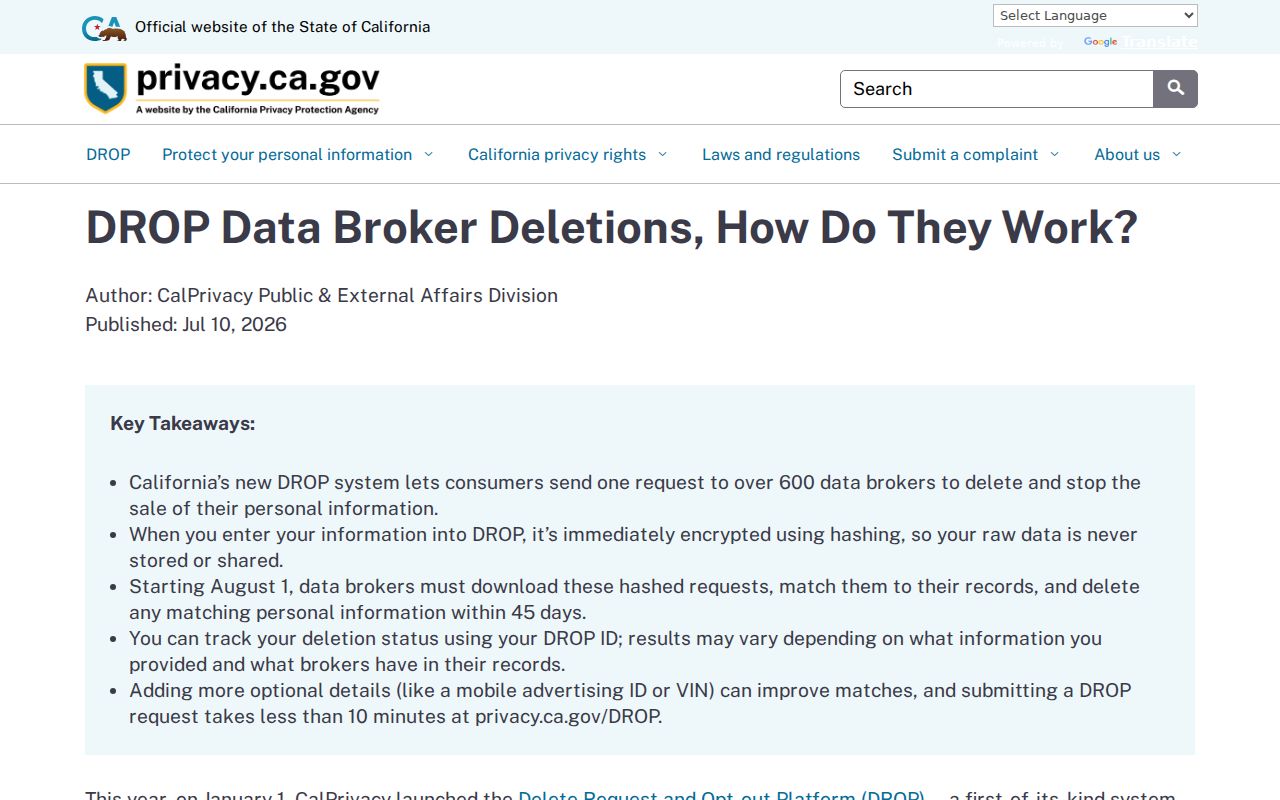
A deletion request may reduce a commercial profile, but it does not create a new public neighbor roster or erase the source record.
Belmont DROP Rules and Source Records
CCPA deletion has an important boundary for Belmont records. Public information, legal obligations, security needs, and transactions are exceptions in the privacy framework. A DROP or CCPA request therefore does not erase a deed, court file, assessment record, or other source held by the responsible public office. It changes the scope of participating commercial data brokers.
The DROP regulations explain the broker-side requirements that make the program current, but they do not turn the program into a parcel or voter-file opt-out.
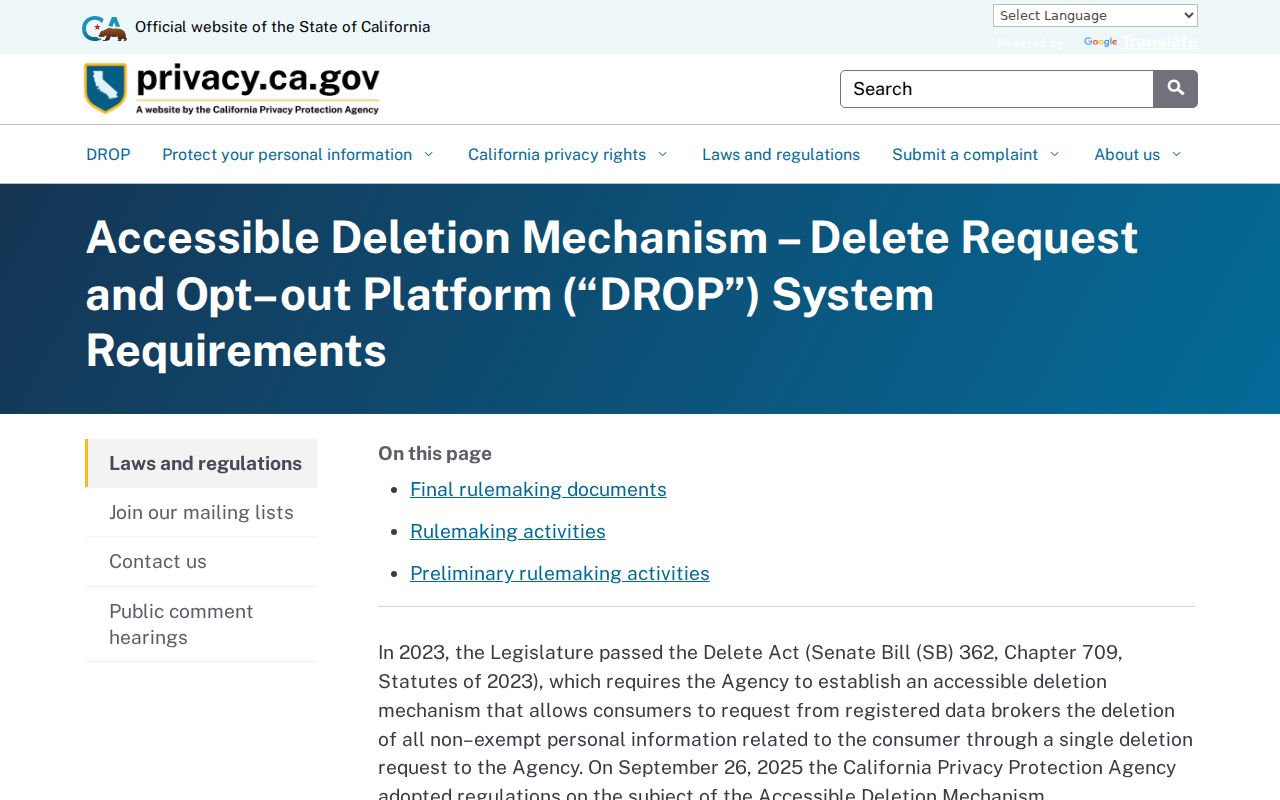
For source correction, contact the custodian named by the record. For broker deletion, use DROP and retain the confirmation. Those are different fixes for different copies of information.
Belmont Neighbor Privacy Limits
Some block facts remain private by design. Renters, children, household members, utility customers, and DMV records are not open substitutes for parcel research. Safe at Home can provide a substitute mailing address and confidential voter registration for qualifying people. A suppressed address is a safety measure, not a puzzle to solve. California also keeps core voter identifiers and signatures confidential.
Use Belmont neighbors information for a lawful personal purpose such as learning about a block, reconnecting with family, checking a public record, or planning ordinary safety steps. Public access does not authorize surveillance or intimidation.
Lawful use. California Penal Code §646.9 addresses stalking involving repeated following or harassment and a credible threat. Penal Code §653m covers certain repeated electronic or telephone harassment, and Code of Civil Procedure §527.6 provides a civil-harassment restraining-order process. Voter misuse can also be a misdemeanor under Elections Code §18109. Never use a neighbor lookup to watch, harass, threaten, or harm anyone.